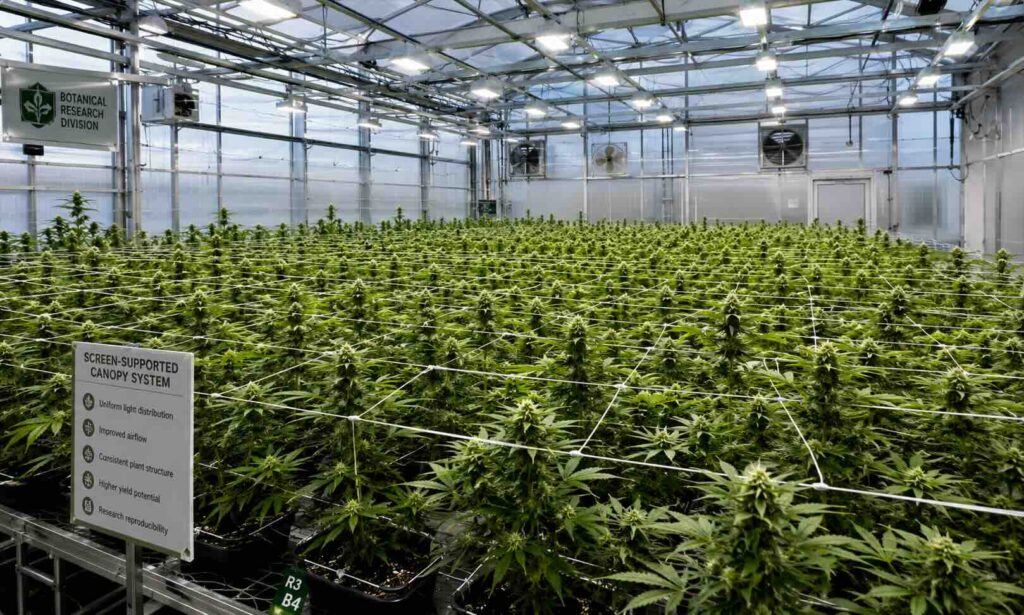
The Screen of Green method, commonly known as SCROG, is one of the most popular canopy management techniques used in indoor cannabis cultivation. Designed to improve light distribution and maximize the use of available growing space, SCROG has become a valuable strategy for growers seeking greater efficiency in controlled environments. While the technique requires planning and patience, many cultivators consider it one of the most effective ways to create a balanced canopy and improve overall grow room organization.
As indoor cultivation continues evolving, SCROG remains relevant because it addresses one of the most important challenges in cannabis growing: making efficient use of available light. Understanding the benefits of this method helps growers determine whether it is suitable for their cultivation goals and growing environment.
What Is the SCROG Method?
SCROG involves using a screen or net positioned above the growing area to guide plant development horizontally rather than allowing plants to grow primarily upward. As branches develop, they are carefully directed through different sections of the screen, encouraging a broader and more even canopy.
This approach allows growers to distribute growth more evenly across the cultivation area. Instead of concentrating development in a limited portion of the canopy, SCROG helps maximize the use of available space.
The technique focuses on managing plant structure in a way that supports consistent environmental conditions.
Careful canopy organization is one of the defining characteristics of successful SCROG cultivation.
Improved Light Distribution
One of the primary advantages of SCROG is improved light distribution. Indoor cultivation relies heavily on artificial lighting, and uneven canopies can create shaded areas that receive less exposure.
By encouraging horizontal growth and maintaining a more uniform canopy, growers can expose a larger portion of the plant to available light. This helps create a more balanced growing environment and can improve overall cultivation efficiency.
Light management remains one of the most important aspects of indoor cannabis cultivation, making SCROG particularly attractive to growers working with limited space.
Better light distribution often leads to more consistent plant development.
Efficient Use of Growing Space
Indoor cultivation environments are frequently limited by available floor space and ceiling height. SCROG helps growers make more effective use of these constraints by encouraging plants to spread horizontally across the growing area.
Rather than allowing a few branches to dominate the canopy, the screen helps distribute growth more evenly. This can create a more organized cultivation environment and simplify canopy management throughout the growing cycle.
Efficient use of space is especially important in smaller grow tents and compact indoor setups.
Proper planning allows cultivators to maximize the productivity of their cultivation area.
Compatibility With Different Cannabis Genetics
Many cannabis cultivars can be adapted to SCROG cultivation, although growth patterns and genetic characteristics may influence how effectively a plant responds to training. Understanding plant structure and development habits helps growers determine whether a particular cultivar is suitable for this approach.
Growers interested in exploring modern autoflowering cannabis genetics can learn more through MinistryOfCannabis. Understanding the interaction between genetics and cultivation techniques helps growers create more effective management strategies.
Matching cultivation methods to plant characteristics often contributes to better long-term results.
The most successful SCROG projects typically begin with thoughtful planning and appropriate genetic selection.
Patience, Observation, and Long-Term Results
SCROG is not a technique that produces instant results. It requires patience, regular observation, and a willingness to guide plant development throughout the growing cycle. However, many growers find that the additional effort contributes to a more organized and manageable cultivation environment.
Keeping records and evaluating canopy development over time can help cultivators refine their approach and improve future results. Experience often reveals how different plants respond to the method under specific environmental conditions.
Additional information regarding cannabis science and educational topics can be explored through https://www.futura-sciences.com/sante/questions-reponses/cannabis.
Continuous learning remains an important part of mastering advanced cultivation techniques.
Final Thoughts
The SCROG method offers several advantages for indoor cannabis growers, including improved light distribution, efficient use of growing space, and enhanced canopy management. While it requires patience and attention to detail, the technique remains one of the most effective tools available for creating a balanced indoor cultivation environment.
By combining appropriate genetics, environmental consistency, and thoughtful canopy management, growers can use SCROG to create more organized growing spaces and support healthy plant development throughout the cultivation cycle.